
Technical Specifications
| Parameter | Detail |
|---|---|
| Chemical Name | Hyaluronic Acid (Sodium Hyaluronate) |
| CAS Number | 9004-61-9 |
| INCI Name | Sodium Hyaluronate |
| Molecular Formula | (C₁₄H₂₁NO₁₁)ₙ |
| Repeating Unit | D-glucuronic acid + N-acetyl-D-glucosamine |
| Specification | ≥95% (HPLC-UV) |
| Appearance | White to off-white fibrous powder |
| Molecular Weight Range | Customizable: Ultra-Low (3–10 kDa), Low (10–100 kDa), Medium (100–500 kDa), High (500–1500 kDa) |
| Solubility | Freely soluble in water |
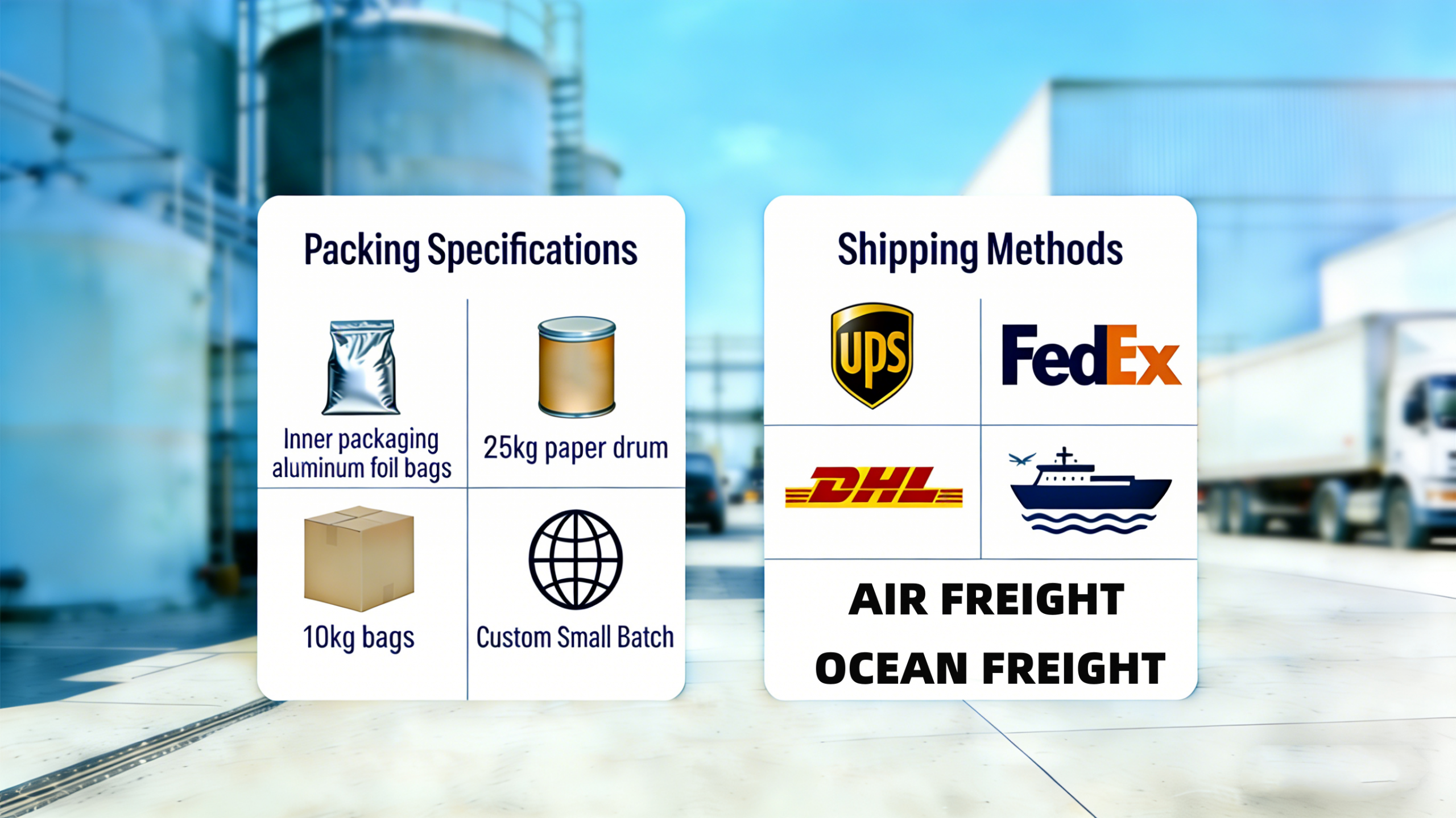
| Packaging | Double-layer poly bags inside, sealed foil-lined paper drums. Net weight: 1kg, 5kg, 25kg/drum |
| Storage | Store at 2–8°C, protected from light and moisture |
| Main Benefits | Deep hydration, anti-aging, skin barrier repair, anti-inflammatory, wound healing, joint health, antioxidant |
| Application | Cosmetics, nutraceuticals, pharmaceuticals, medical devices |
Uncompromising Quality: SRBio‘s Manufacturing Excellence
Advanced Microbial Fermentation Technology
GRAS-Compliant Bioprocess: Hyaluronic acid is now primarily obtained through microbial fermentation using bacterial strains like Streptococcus zooepidemicus, eliminating zoonotic risks and allergen concerns linked to animal-derived materials. This approach allows for controlled molecular weight, higher purity, and sustainable large-scale production.
Scalable Production Platform: Under optimized submerged fermentation conditions, industrial processes can achieve yields between 7–10 g/L, with continuous advancements in strain engineering further enhancing productivity. Emerging recombinant strains of Bacillus and other GRAS organisms are being developed for improved safety and process control.
Eco-Impact: Microbial fermentation significantly reduces environmental footprint compared to traditional animal extraction methods, supporting your green formulation goals.
Precision Quality Control
HPLC-UV Purity Verification: Purity is stringently controlled to ≥95.0% (tested per in-house and pharmacopoeia standards). Impurity profile monitored to ensure batch-to-batch consistency and formulation reliability.
Heavy Metal Screening: ICP-MS analysis confirms conformity with global cosmetic regulations: Lead (Pb) < 2 ppm, Arsenic (As) < 1 ppm, Mercury (Hg) < 0.1 ppm, Cadmium (Cd) < 0.1 ppm.
Molecular Weight Control: Advanced fermentation and purification technologies enable precise molecular weight tailoring to meet specific application requirements—from ultra-low MW (<10 kDa) for deep skin penetration to high MW (>1000 kDa) for surface hydration and dermal fillers.
Stability & Shelf-Life Superiority
Accelerated Stability Data: Formulated in a standard emulsion and tested under ICH conditions, Hyaluronic Acid retains ≥98% potency after 24 months at 25°C/60% RH and 6 months at 40°C/75% RH.
Protective Packaging: Supplied in nitrogen-flushed, light-protective, vacuum-sealed foil packaging to prevent moisture absorption and degradation, ensuring formulation-ready integrity.
Scientific Evidence: Mechanism & Efficacy
Deep Hydration & Moisture Retention
Superior Water-Binding Capacity: Hyaluronic acid is a powerful humectant that can bind up to 1,000–10,000 times its weight in water, serving as an ideal natural moisturizing factor in the skin. Over 50% of the total HA content in the human body is found in the skin, where it maintains proper hydration, elasticity, and firmness as a key extracellular matrix component.
Age-Related Decline: With age, HA production gradually decreases, leading to reduced water-binding capacity, drier and less elastic skin, and the formation of wrinkles—making exogenous HA supplementation essential for maintaining youthful skin.
Anti-Aging & Wrinkle Reduction
Collagen Synthesis Promotion: HA plays an active role in regulating cell proliferation, differentiation, migration, and signaling pathways involved in skin aging. HA-based formulations, including creams, gels, serums, and dermal fillers, are instrumental in combating wrinkles, enhancing skin hydration, and restoring facial volume.
Molecular Weight-Dependent Efficacy: Among HA molecules with different molecular weights, 50 kDa HA exhibits the highest anti-inflammatory activity, significant capability to induce collagen synthesis, and high level of skin permeation, making it a potent candidate for effective anti-aging and anti-wrinkle cosmetic agents.
Anti-Inflammatory & Skin Barrier Support
Inflammation Modulation: HA is indispensable in regulating inflammatory responses, angiogenesis, and tissue regeneration. Both ultra-low-molecular-weight HA (uLMW-HA) and high-molecular-weight HA (HMW-HA) have been shown to inhibit UVB-induced keratinocyte inflammation.
Barrier Function Restoration: HA contributes to the restoration of skin barrier function, modulation of oxidative stress and inflammation, and promotion of extracellular matrix remodeling—reducing dryness, irritation, and inflammatory responses.
Wound Healing & Tissue Regeneration
Multistage Wound Healing Support: HA plays an active role in the wound-healing process at every stage, from inflammation to proliferation and remodeling. Its inherent biocompatibility and high biodegradability facilitate chemical modification, rendering it an ideal material for wound healing and tissue regeneration.
Skin Regeneration: HA-based biomaterials offer innovative therapies for tissue repair and regenerative medicine, with significant cosmetic efficacy in the treatment of skin aging.
Molecular Weight Penetration & Biological Activity
Size-Dependent Penetration: Research demonstrates that HA below 100 kDa can penetrate skin, with lower molecular weight forms able to reach the dermis. Ultra-low MW HA (3–10 kDa) exhibits average particle size of <25 nm, making it easier to penetrate into deeper layers of the skin compared to ordinary molecular weight hyaluronic acid.
Multi-Layer Hydration Strategy: Different molecular weights allow for varied depths of penetration, making HA suitable for use in different areas of the face and body—from surface hydration (high MW) to deep dermal nourishment (low MW).
Antioxidant Protection
Free Radical Scavenging: HA exhibits strong antioxidant capacity, quickly hydrating epidermal cells, locking water deeply, and providing anti-aging, free radical scavenging, and skin brightening effects. When applied to skin care products, it repairs damaged cells, improves cell viability, and promotes wound healing, making skin smooth, moist, and elastic.
Key Benefits Summary
-
Deep Hydration: Binds up to 10,000 times its weight in water for intense moisturization
-
Anti-Aging Power: Promotes collagen synthesis and reduces visible signs of aging
-
Wrinkle Reduction: Smooths fine lines and restores facial volume
-
Anti-Inflammatory Support: Calms irritated and sensitive skin through inflammation modulation
-
Skin Barrier Repair: Restores barrier function and reduces transepidermal water loss
-
Wound Healing: Accelerates tissue repair and regeneration at every stage
-
Antioxidant Defense: Scavenges free radicals and protects against oxidative stress
-
Molecular Weight Versatility: Customizable MW range from 3 kDa to 1500 kDa for targeted applications
Application Areas
1. Cosmetic & Skincare Products
-
Facial serums and essences: Deep hydration and anti-aging benefits
-
Moisturizing creams and lotions: Enhanced water retention and skin barrier support
-
Eye creams: Reduction of fine lines and under-eye puffiness
-
Sunscreen and after-sun care: Soothing and repair benefits for UV-exposed skin
-
Masks and sheet masks: Intensive hydration and plumping effects
-
Hair care products: Scalp hydration and hair shaft conditioning
2. Medical Aesthetics
-
Dermal fillers: Volume restoration, wrinkle reduction, and facial contouring (requires cross-linked HA)
-
Skin boosters: Deep hydration and skin quality improvement
-
Microneedling and mesotherapy: Enhanced product delivery and tissue regeneration
3. Pharmaceutical Applications
-
Ophthalmic surgery: Viscoelastic agents for corneal transplantation, cataract surgery, and glaucoma surgery
-
Wound dressings: Hydrogels, sponges, membranes, and films for chronic and acute wounds
-
Osteoarthritis treatment: Viscosupplementation for joint pain management
-
Drug delivery systems: Targeted therapy formulations
4. Nutraceuticals & Dietary Supplements
-
Oral HA supplements: Improves skin hydration, elasticity, and reduces wrinkles through systemic absorption
-
Joint health formulations: Supports cartilage lubrication and reduces joint discomfort
-
Beauty-from-within products: Enhances skin brightness, smoothness, and overall appearance
5. Emerging Applications
-
Nasal sprays: Mucosal hydration and drug delivery
-
Veterinary products: Animal joint health and wound care (HYAPET formulations)
-
Oral care: Gum health and mucosal protection
For Best Results
Topical Application: Add at the low-temperature stage (below 45°C) during formulation to preserve bioactivity. Recommended dosage: 0.05–1.0% depending on molecular weight and desired efficacy intensity.
Nutraceutical Application: Recommended dosage: 40–200 mg/day for skin health benefits. Higher molecular weight HA is typically preferred for oral supplementation due to enhanced stability during digestion.
Hyaluronic Acid is water-soluble and compatible with most cosmetic formulations, including emulsions, serums, gels, creams, lotions, and anhydrous systems. It exhibits no known comedogenicity and is considered safe for all skin types.
Safety & Regulatory Compliance
Comprehensive Safety Profile
Hyaluronic acid has been used in soft tissue augmentation for over 26 years due to its effectiveness and favorable safety profiles. The safety of HA-containing formulations has been evaluated in numerous clinical trials and is supported by independent reports of commercial ingredients.
Low Molecular Weight HA Safety
Low molecular weight hyaluronic acid (LMW-HA) is considered safe for use in topical application at recommended dosages, based on comprehensive in vitro and ex vivo investigations. Studies confirm that LMW-HA is not predicted as a skin sensitizer, nor a mutagenic or genotoxic substance. It does not induce pro-inflammatory cytokines (TNF-α, IL-1β, IL-1α) and shows no mutagenic activity in standard assays.
Safety Advantages
-
No known skin sensitization in clinical evaluations
-
Non-genotoxic and non-mutagenic
-
Biocompatible and biodegradable
-
Favorable safety margin for long-term use
-
Suitable for use during pregnancy
Quality Certifications
| Parameter | Compliance |
|---|---|
| Manufacturing Standards | ISO/GMP certified facility |
| Cosmetic Grade | Meeting global cosmetic ingredient specifications |
| Pharmaceutical Grade | Available for medical device and API applications |
| Heavy Metals | Compliant with USP/EP/JP standards |
| Microbial Limits | <100 CFU/g total aerobic count |
| Endotoxin Levels | <0.5 EU/mg (pharma grade) |
Xi’an SR Bio-Engineering Co., Ltd
Xi’an SRBio is a professional wholesale provider of high-quality cosmetic actives, nutritional supplements, and pharmaceutical intermediates. We supply powder, tablet, and capsule formulations with rigorous quality control at every stage of production. Our commitment to manufacturing excellence, scientific validation, and sustainable practices ensures that every batch meets the highest industry standards.
With customizable molecular weight options and flexible packaging solutions, SRBio partners with global brands to deliver consistent, high-purity Hyaluronic Acid for diverse applications across cosmetics, nutraceuticals, and pharmaceuticals.
For bulk inquiries, technical data sheets, custom molecular weight specifications, or formulation support, please contact our sales team.
Shipping & Packing Information
OEM SERVICE
We offer all-inclusive product development from consultation to delivery.
We make product proposals based on the customer’s requirements, from small to large lots.

